

Mental Wellbeing & Stress
Why Mental Wellbeing Matters
Mental wellbeing is more than the absence of mental illness. It influences how we think, feel, cope with challenges, build relationships, and navigate everyday life.
Everyone experiences periods of stress, uncertainty, disappointment, and emotional strain. These are normal parts of being human. Problems arise when pressures become chronic, recovery is inadequate, or healthy coping mechanisms are absent.
Mental wellbeing is closely connected to every other pillar of health. Sleep, exercise, nutrition, relationships, and lifestyle habits all influence how we feel and function.
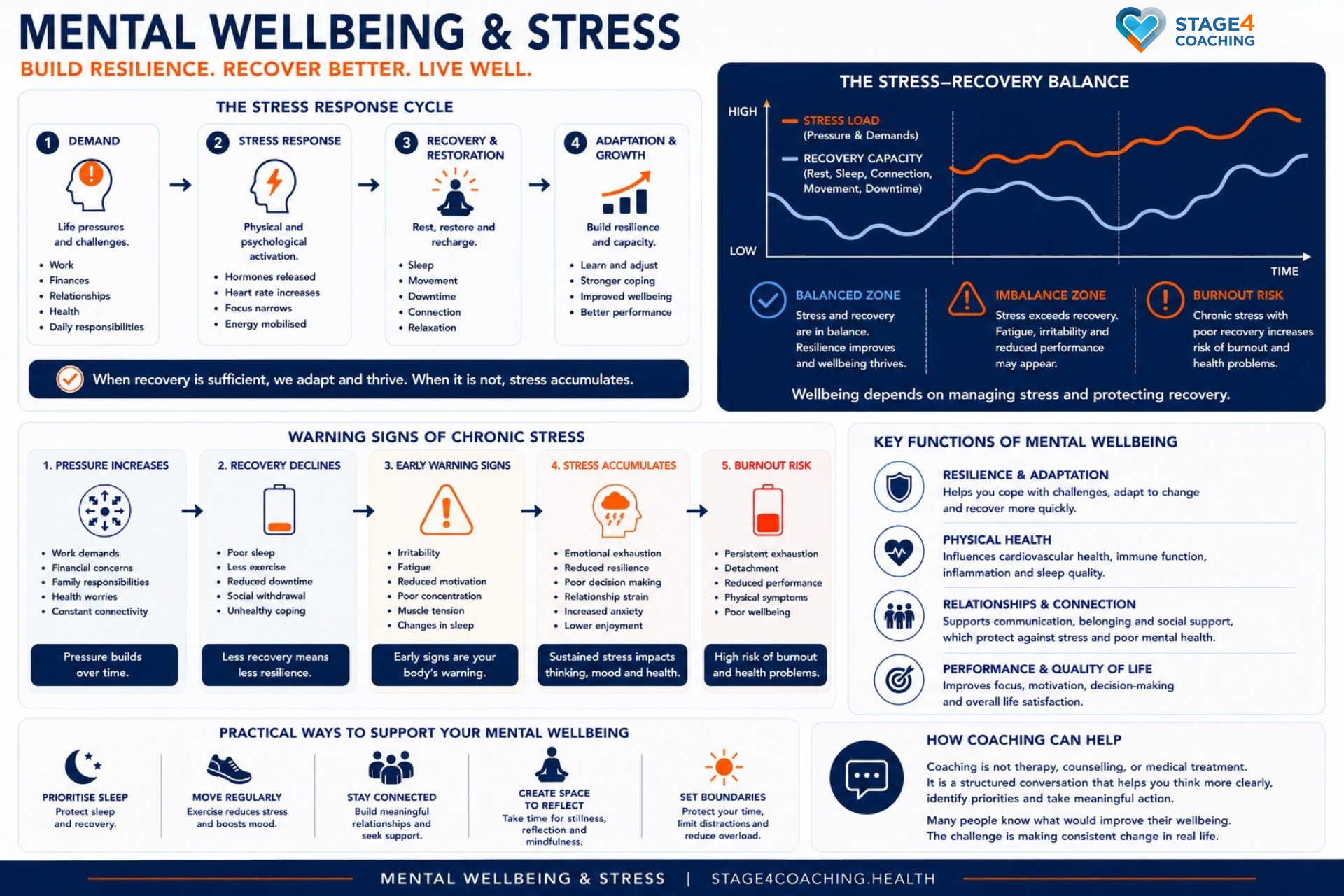
Mental Wellbeing and Physical Health
The mind and body are deeply interconnected.
Poor mental wellbeing is associated with:
Increased cardiovascular disease risk
Higher blood pressure
Poorer sleep quality
Increased inflammation
Reduced immune function
Increased alcohol and substance use
Reduced physical activity
Conversely, positive mental wellbeing supports resilience, motivation, healthy decision-making, and overall quality of life.
Understanding Stress
Stress itself is not the enemy.
In fact, short periods of stress can improve performance, focus, and adaptation.
The problem arises when stress becomes chronic and recovery becomes insufficient.
Modern life often exposes us to ongoing pressures:
Work demands
Financial concerns
Family responsibilities
Health worries
Constant digital connectivity
Without adequate recovery, these pressures can gradually erode wellbeing.
Practical Ways to Improve Mental Wellbeing
Prioritise sleep and recovery
Exercise regularly
Spend time outdoors
Build meaningful social connections
Reduce unnecessary commitments
Create moments of stillness and reflection
Develop healthy boundaries around work and technology
Mental wellbeing is rarely improved through a single intervention. Small improvements across multiple areas often produce the greatest benefits.
Mental Wellbeing and Men
Many men are taught from an early age to solve problems independently, remain stoic, and avoid appearing vulnerable.
While resilience is valuable, it can sometimes make it harder to recognise when support is needed.
Men are often more likely to:
Internalise stress
Delay seeking help
Use alcohol or distraction to cope
Ignore early signs of burnout
Common warning signs include:
Irritability
Reduced motivation
Fatigue
Poor sleep
Increased alcohol consumption
Emotional withdrawal
Addressing these signs early can have significant benefits for both physical and mental health.
How Coaching Can Help
Coaching is not therapy, counselling, or medical treatment.
It is a structured conversation that helps people think more clearly, identify priorities, and take meaningful action.
Many people already know what changes would improve their wellbeing. The challenge is finding a way to make those changes happen consistently in real life.
Frequently Asked Questions
-
Stress affects people differently, but common signs include irritability, poor sleep, fatigue, difficulty concentrating, feeling overwhelmed, muscle tension, and changes in appetite or alcohol consumption. Short periods of stress are a normal part of life. Problems arise when stress becomes persistent and recovery is inadequate.
-
Not necessarily. Stress is a normal biological response that helps us respond to challenges and threats. The issue is not stress itself, but chronic stress without sufficient recovery. Long-term stress is associated with increased risks of cardiovascular disease, high blood pressure, sleep problems, anxiety, depression, and poorer overall health.
-
Burnout is a state of physical, emotional, and mental exhaustion often associated with prolonged workplace stress. Common symptoms include exhaustion, cynicism or detachment, and reduced effectiveness. Burnout is not simply being busy or tired; it develops when demands consistently exceed available resources and recovery.
-
Persistent fatigue can have many causes, including poor sleep, chronic stress, depression, medical conditions, physical inactivity, alcohol use, and certain medications. Feeling tired all the time is not necessarily a normal part of ageing and may warrant further assessment if it persists.
-
Yes. Regular physical activity is associated with improved mood, reduced anxiety, better sleep, and greater resilience to stress. Exercise is not a cure for all mental health challenges, but it is one of the most consistently supported lifestyle interventions for improving mental wellbeing.
-
No. Stress is usually a response to an external pressure or challenge. Anxiety is characterised by excessive worry, fear, or apprehension that may persist even when no immediate threat is present. While stress can contribute to anxiety, the two are not the same.
-
Yes. Sleep and mental wellbeing are closely linked. Poor sleep can increase irritability, reduce emotional resilience, impair concentration, and worsen symptoms of anxiety and depression. Likewise, stress and mental health challenges can negatively affect sleep.
-
Research consistently supports several lifestyle approaches, including regular physical activity, adequate sleep, meaningful social connections, spending time in nature, limiting alcohol consumption, and developing effective stress-management strategies. Small, sustainable improvements across multiple areas often have a greater impact than focusing on a single intervention.