

Relationships & Connection
Why Relationships Matter
Human beings are social creatures.
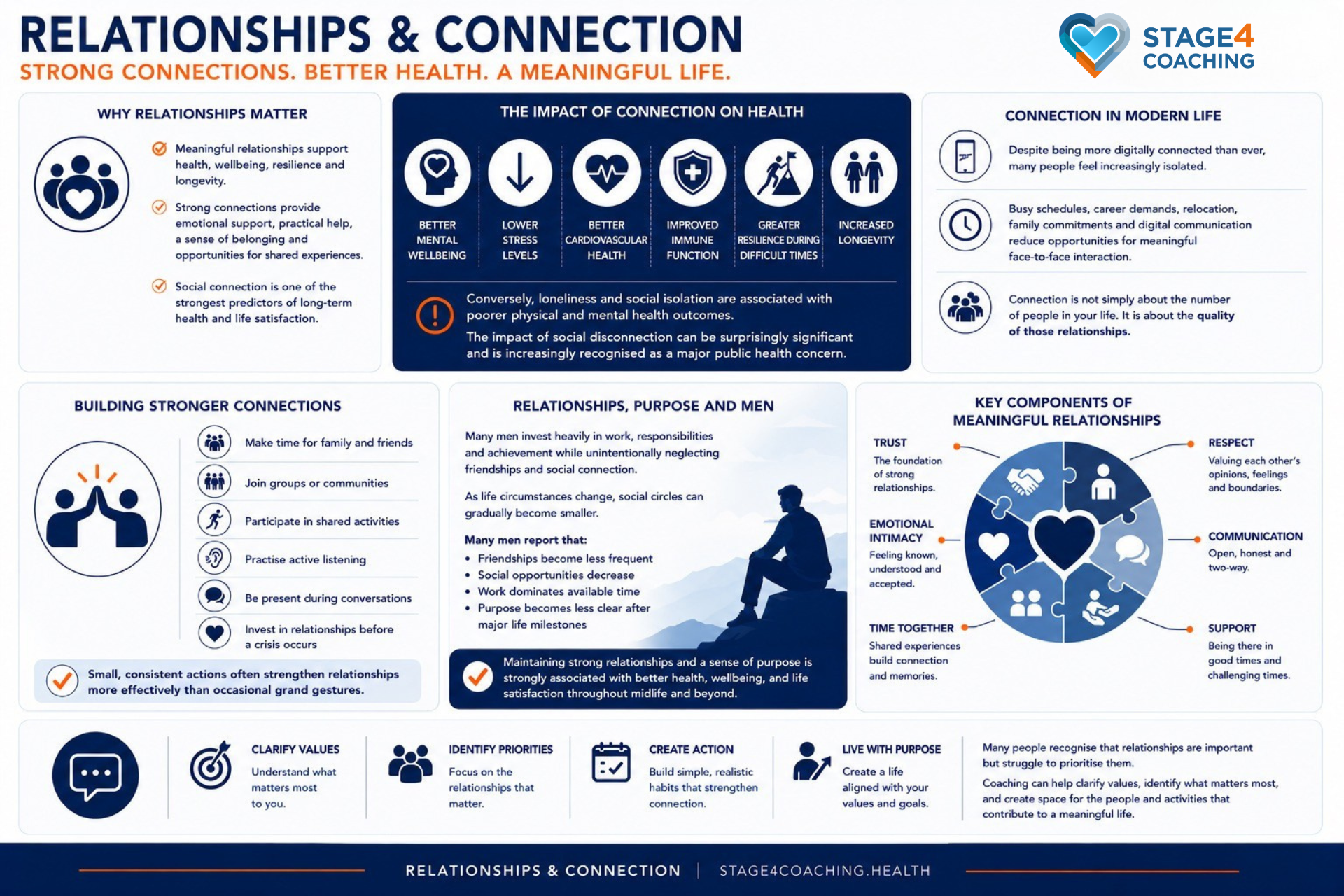
Meaningful relationships contribute to health, wellbeing, resilience, and longevity. Strong social connections provide emotional support, practical help, a sense of belonging, and opportunities for shared experiences.
Research consistently shows that social connection is one of the strongest predictors of long-term health and life satisfaction.
Relationships and Health
People with strong social connections tend to experience:
Better mental wellbeing
Lower stress levels
Better cardiovascular health
Improved immune function
Greater resilience during difficult times
Increased longevity
Conversely, loneliness and social isolation are associated with poorer physical and mental health outcomes.
The impact of social disconnection can be surprisingly significant and is increasingly recognised as a major public health concern.
Connection in Modern Life
Despite being more digitally connected than ever, many people feel increasingly isolated.
Busy schedules, career demands, relocation, family commitments, and digital communication can all reduce opportunities for meaningful face-to-face interaction.
Connection is not simply about the number of people in your life. It is about the quality of those relationships.
Building Stronger Connections
Meaningful relationships require time and attention.
Helpful strategies include:
Making time for family and friends
Joining groups or communities
Participating in shared activities
Practising active listening
Being present during conversations
Investing in relationships before a crisis occurs
Small, consistent actions often strengthen relationships more effectively than occasional grand gestures.
Relationships, Purpose and Men
Many men invest heavily in work, responsibilities, and achievement while unintentionally neglecting friendships and social connection.
As life circumstances change, social circles can gradually become smaller.
Many men report that:
Friendships become less frequent
Social opportunities decrease
Work dominates available time
Purpose becomes less clear after major life milestones
Maintaining strong relationships and a sense of purpose is strongly associated with better health, wellbeing, and life satisfaction throughout midlife and beyond.
How Coaching Can Help
Many people recognise that relationships are important but struggle to prioritise them.
Coaching can help clarify values, identify what matters most, and create space for the people and activities that contribute to a meaningful life.
Health is not only about avoiding disease. It is also about creating a life worth living.
Frequently Asked Questions
-
Yes. Research consistently shows that chronic loneliness and social isolation are associated with poorer physical and mental health outcomes. They have been linked to increased risks of cardiovascular disease, depression, cognitive decline, and premature mortality. Human beings are social creatures, and meaningful connection appears to be an important component of long-term health.
-
Many people find that work, family responsibilities, caregiving, and other commitments gradually reduce the time available for friendships. Unlike school or early adulthood, opportunities for regular social contact often become less automatic. Maintaining friendships in midlife usually requires more deliberate effort than it did in younger years.
-
There is no specific number. Research suggests that the quality of relationships matters far more than the quantity. A small number of supportive, meaningful relationships is generally more beneficial than a large network of superficial connections.
-
Yes. Strong social relationships are associated with lower rates of depression and anxiety, greater resilience during difficult times, and higher levels of life satisfaction. Social support can also help people cope more effectively with stress and major life events.
-
Cultural expectations, upbringing, and social norms often encourage men to appear self-reliant and avoid vulnerability. While independence can be a strength, it may also make it more difficult to seek support or discuss personal challenges. Many men report that they would like deeper conversations but are unsure how to initiate them.
-
Research suggests that people with a strong sense of purpose tend to experience better wellbeing, healthier behaviours, and greater resilience when facing adversity. Purpose does not have to be grand or extraordinary. It can come from relationships, family, work, hobbies, community involvement, or contributing to something larger than oneself.
-
Social media can help people stay in touch and maintain relationships, particularly across distance. However, evidence suggests that online interaction does not fully replace the benefits of meaningful face-to-face connection. The quality of social interaction generally matters more than the number of online contacts.
-
Small, consistent actions are often the most effective. Examples include making time for regular contact with friends and family, joining groups or clubs, participating in shared activities, volunteering, or simply reaching out to someone you have not spoken to in a while. Meaningful relationships are usually built through repeated small investments over time.