

Sleep & Recovery
Why Sleep Matters
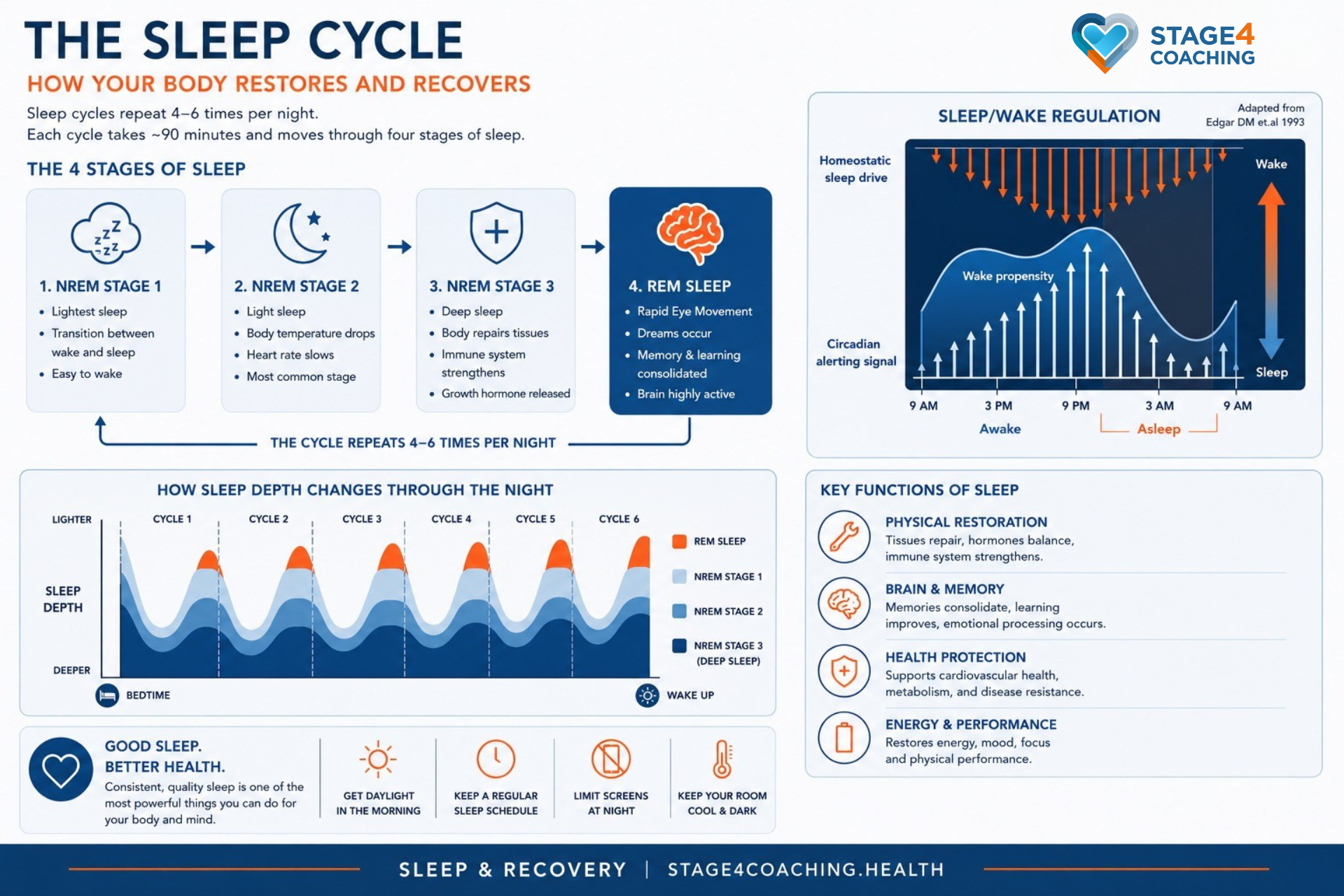
Sleep is not simply a period of rest. It is an active biological process during which the body repairs, restores, and prepares itself for the next day.
During sleep, memories are consolidated, hormones are regulated, muscles recover, and the immune system performs many of its maintenance functions. Good sleep supports physical health, mental wellbeing, emotional resilience, and performance.
Most adults require around 7–9 hours of sleep per night, although individual needs vary.
Unfortunately, modern life often works against healthy sleep. Artificial light, screens, stress, irregular schedules, alcohol, and long working hours can all interfere with sleep quality and recovery.
Sleep and Long-Term Health
Poor sleep is associated with an increased risk of:
Obesity and weight gain
Type 2 diabetes
High blood pressure
Cardiovascular disease
Depression and anxiety
Reduced immune function
Reduced concentration and productivity
Many people focus on nutrition and exercise while overlooking sleep. Yet poor sleep can undermine both. Lack of sleep influences appetite hormones, increases cravings for high-calorie foods, reduces motivation to exercise, and makes healthy decision-making more difficult.
For this reason, sleep is often one of the most powerful starting points for improving overall health.
Understanding Circadian Rhythm
The body operates on an internal 24-hour clock known as the circadian rhythm.
This system regulates sleep, alertness, hormone production, body temperature, and many other biological functions.
Morning daylight helps synchronise this internal clock and promotes healthy sleep later that evening. Conversely, exposure to bright light late at night can delay sleep and reduce sleep quality.
Supporting your circadian rhythm is often one of the simplest and most effective ways to improve sleep naturally.
Common Sleep Problems
Many adults experience:
Difficulty falling asleep
Waking during the night
Early morning waking
Feeling tired despite spending enough time in bed
Difficulty switching off a busy mind
Sleep problems are often caused by multiple factors rather than a single issue. Stress, alcohol, caffeine, poor routines, inconsistent schedules, medical conditions, and lifestyle habits can all play a role.
Practical Ways to Improve Sleep
Small changes can make a surprisingly large difference.
Consider:
Maintaining a regular sleep and wake time
Getting outside into daylight early in the morning
Limiting caffeine later in the day
Reducing alcohol consumption
Keeping the bedroom cool, dark, and quiet
Avoiding heavy meals close to bedtime
Limiting screens and bright light in the evening
Creating a consistent wind-down routine
The goal is not perfection. It is creating conditions that allow good sleep to happen more consistently.
Sleep, Ageing and Men's Health
Many men notice changes in their sleep as they move through their forties and fifties.
Sleep may become lighter, night-time waking may become more common, and recovery from poor sleep often takes longer than it did in younger years.
At the same time, many men are balancing demanding careers, family responsibilities, financial pressures, and changing health priorities. These factors can gradually erode sleep quality without being fully recognised.
Poor sleep in midlife is associated with:
Increased abdominal fat
Reduced energy levels
Reduced exercise performance
Higher blood pressure
Increased risk of diabetes
Lower mood and resilience
Reduced testosterone production
Many men search for ways to improve energy, fitness, body composition, and performance while overlooking the role of sleep. Yet improving sleep is often one of the highest-return investments they can make for their health.
How Coaching Can Help
Most people already know that sleep is important.
The challenge is turning that knowledge into habits that fit real life.
Coaching can help identify the obstacles that are preventing good sleep, create realistic strategies, and build routines that support long-term recovery and wellbeing.
Better sleep rarely comes from a single tip or trick. More often, it comes from making small, sustainable changes that work together over time.
Frequently Asked Questions
-
Description tMost adults require between 7 and 9 hours of sleep per night. Individual requirements vary, but regularly sleeping less than 7 hours is associated with increased risks of obesity, type 2 diabetes, cardiovascular disease, and poorer mental wellbeing.
-
Night-time waking is common and can have many causes, including stress, anxiety, alcohol consumption, sleep apnoea, environmental disturbances, medication, or simply normal sleep architecture. Waking occasionally is normal. Persistent sleep disruption that affects daytime functioning may warrant further assessment.
-
Alcohol may help people fall asleep more quickly, but it generally reduces sleep quality. It suppresses REM sleep, increases night-time waking, and can worsen snoring and sleep apnoea. Many people feel less refreshed after drinking, even if they slept for a similar number of hours.
-
Sleeping longer at weekends can help reduce some of the effects of sleep deprivation, but it is not a complete solution. Regular sleep patterns are generally more beneficial than alternating between short weekday sleep and long weekend lie-ins.
-
Sleep hygiene refers to habits and environmental factors that support healthy sleep. Examples include maintaining regular sleep and wake times, obtaining morning daylight exposure, limiting caffeine late in the day, reducing evening screen use, and keeping the bedroom cool, dark, and quiet.
-
Feeling tired despite adequate sleep duration can have many causes. Poor sleep quality, sleep apnoea, stress, depression, medical conditions, medications, alcohol, and insufficient physical activity can all contribute. The number of hours spent in bed is only one aspect of restorative sleep.
-
Regular physical activity is associated with improved sleep quality, shorter time to fall asleep, and fewer night-time awakenings. Exercise appears to be particularly beneficial for people experiencing mild sleep difficulties, although vigorous exercise immediately before bedtime may affect some individuals.
-
Yes. Poor sleep influences hormones involved in appetite regulation, including ghrelin and leptin. Sleep deprivation is associated with increased hunger, stronger cravings for high-calorie foods, and a higher risk of weight gain over time. Sleep is therefore an important component of healthy weight management.